

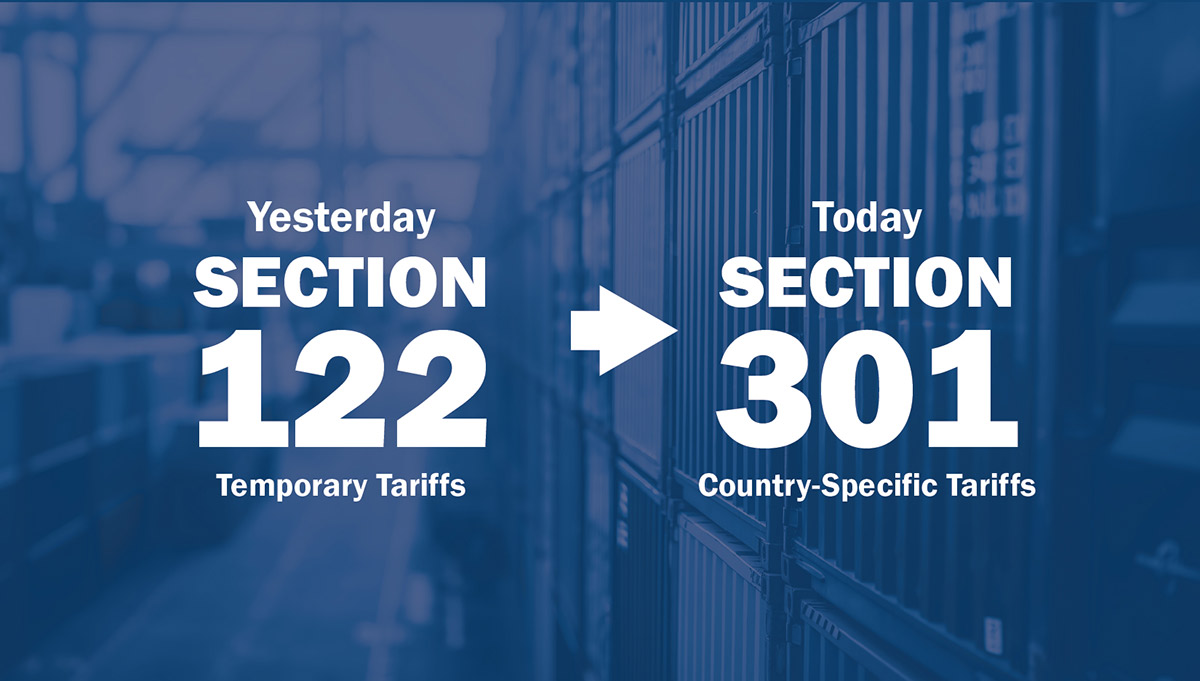
The temporary Section 122 tariffs expired today, July 24, as scheduled. However, rather than reducing tariff exposure for most importers, the Administration has implemented a new set of country-specific tariffs under Section 301 of the Trade Act of 1974.
The new measures are intended to replace much of the temporary tariff structure that had been in place following the Supreme Court’s decision earlier this year invalidating the previous IEEPA-based tariffs. The Administration has stated that the new Section 301 actions provide a stronger statutory foundation for maintaining broad tariff coverage while addressing concerns related to forced labor and international trade practices.
What Changed?
- The temporary Section 122 tariff authority has now expired.
- New Section 301 tariffs became effective immediately.
- The new tariffs apply to approximately 60 countries, with rates generally ranging from 10% to 12.5%, depending on the country.
- Certain products continue to receive exemptions, including selected energy products, aircraft, fertilizers, and some food products.
What This Means for Importers
For many importers, today’s change is more of a legal transition than a reduction in duties.
Although the legal authority has changed, many companies will continue paying tariffs on imported goods. Importers should review how the new Section 301 framework applies to their sourcing countries, product classifications, and landed costs, as country-specific treatment may differ from the temporary Section 122 program.
Worldwide Logistics Group Recommendation
Companies importing goods into the United States should:
- Review current sourcing countries and applicable tariff rates.
- Confirm product classifications remain accurate.
- Monitor additional government guidance and implementation updates.
- Evaluate opportunities to reduce duty exposure through customs planning, alternative sourcing strategies, or available tariff mitigation programs.
As U.S. trade policy continues to evolve, importers should expect additional developments in the coming weeks.
Need Help Understanding How These Changes Affect Your Imports?
Worldwide Logistics Group’s customs brokerage and trade compliance specialists can help review your sourcing countries, tariff exposure, and import strategy to identify potential risks and opportunities. If you have questions about how the new Section 301 tariffs may impact your business, contact our team for guidance.
Official Resources