
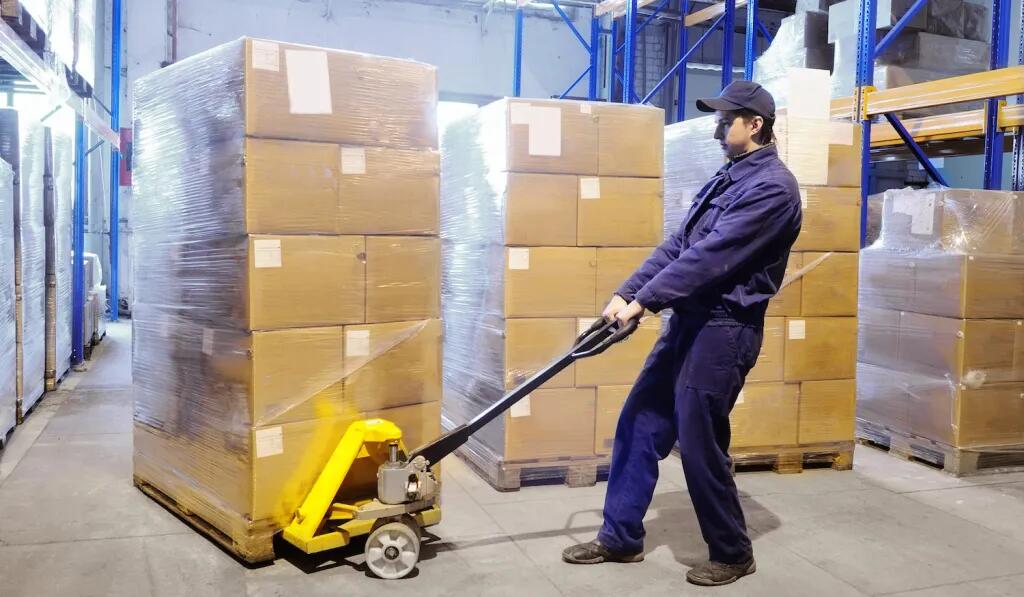
Warehousing gets treated as the unglamorous part of logistics. Products go in, products come out, and somewhere in between they sit on a shelf. That framing undersells what warehousing actually does and sets businesses up for problems they could have avoided.
A warehouse isn’t a parking lot for inventory. It’s an active part of your supply chain, and how well it functions has a direct effect on everything downstream: order accuracy, shipping speed, cost per unit moved, and how well your operation holds up when demand shifts.
Storage Is the Starting Point, Not the Whole Picture
The basic purpose of a warehouse is to receive goods and hold them until they’re needed. That part is straightforward. What makes it more involved is everything required to make that storage useful, rather than just physical.
Someone has to log each item that arrives, inspect it, and place it somewhere it can actually be found again. That sounds simple until you’re managing thousands of SKUs, multiple product categories, or items with expiration dates and serial numbers. Without a disciplined receiving and putaway process, stock levels become unreliable, and unreliable stock levels create fulfillment errors.
Organization inside a warehouse isn’t a one-time setup. It’s an ongoing discipline. Products move, demand patterns shift, and the slot that made sense for a SKU six months ago may be working against your pick efficiency today.
What Happens Between Receiving and Shipping
Most of the work in warehousing happens in the middle, between the moment goods arrive and the moment they leave. This is where inventory management, cycle counting, slotting decisions, and space planning all live.
Cycle counting, the practice of regularly auditing portions of your inventory rather than shutting down for a full physical count, keeps your system data accurate. If your warehouse management system says you have 200 units of a product and you actually have 183, you’ll eventually sell something you can’t deliver. Catching that discrepancy before it reaches a customer is the entire point.
Slotting decisions, meaning where you place products within the facility, directly affect how quickly your team processes orders. High-velocity SKUs positioned close to packing areas reduce the distance staff travel per pick. That may sound like a minor efficiency gain until you multiply it across hundreds of picks per day.
Space utilization is another ongoing management decision. Storage density and flow exist in tension with each other. Pack a facility too tightly, and movement slows. Leave too much open floor, and you’re paying for square footage that isn’t working. Finding the right balance and adjusting it as volumes change is a genuine challenge.
Storage Conditions Matter Too
Not every product can share the same space. Temperature-sensitive goods, including food, pharmaceuticals, and certain chemicals, require climate-controlled environments with specific humidity and temperature ranges. Facilities handling consumables need to meet FDA and sanitation standards. Some products require cold chain management from the moment they leave the manufacturer to the moment they reach the end customer.
Getting this wrong isn’t just an inconvenience. For regulated products, it creates compliance exposure and potential liability. Before committing to a warehousing and fulfillment services provider, understanding whether they have the right storage conditions for your product type is a prerequisite, not an afterthought.
The Systems That Tie It Together
A warehouse management system is the backbone of any serious warehousing setup. It tracks what comes in, monitors stock levels, directs putaway and picking, and gives you the data needed to manage the facility without guesswork.
Without one, you’re relying on manual counts and institutional memory. That might hold at very low volumes. It doesn’t scale, and it produces the kind of inventory discrepancies that show up as customer complaints and write-offs.
Integration matters too. A WMS that doesn’t connect to your order management system or e-commerce platform creates manual handoffs, and manual handoffs create errors. The goal is a flow where an incoming order triggers picking automatically, without anyone reconciling spreadsheets at the end of the day.
Some facilities use barcode scanning, RFID, or automated picking systems to reduce handling errors and speed up throughput. The right technology depends on volume, product type, and budget, but the underlying principle holds: better data leads to better decisions.
Where Warehousing Fits in the Broader Chain
Warehousing doesn’t operate in isolation. It connects directly to inbound freight on one side and outbound shipping or fulfillment on the other. How well those handoffs work determines how much friction your supply chain carries.
A warehouse that receives shipments efficiently, processes them quickly, and maintains accurate stock records makes every downstream step easier. Poor organization or unreliable inventory data creates problems that ripple outward, showing up as delayed orders and fulfillment errors that cost money to fix.
Businesses that treat warehousing as a passive holding point tend to underinvest in it until something breaks. The ones that treat it as a managed part of their operation tend to catch problems earlier and scale more cleanly.
In-House vs. Outsourced
Running your own warehousing gives you direct control over processes, staff, and facility decisions. It also means carrying the full cost of that infrastructure, including lease, equipment, labor, and systems, regardless of whether your volume justifies it at any given point.
Third-party logistics providers offer a different structure. A 3PL owns the warehouse space and employs the staff, so the cost model becomes more variable. You pay for what you use rather than maintaining fixed overhead. The tradeoff is less direct control, which makes choosing the right partner more consequential.
Worldwide Logistics Group has handled warehousing for clients across industries since 1998. That includes businesses needing long-term storage, those managing seasonal volume swings, and those running mixed distribution models covering both bulk holding and consumer order fulfillment. The right setup depends on your product type, volume, growth trajectory, and how much complexity you want to manage internally.
What Good Warehousing Delivers
At its best, warehousing gives your supply chain a stable foundation. Stock levels are accurate. Products move in and out without unnecessary handling errors or delays. When demand spikes, the operation adjusts without falling apart.
That reliability doesn’t happen by accident. It comes from treating warehousing as a managed part of the business with clear standards, not as dead space where inventory waits. Operations that get this right spend less time chasing discrepancies and more time shipping product.