
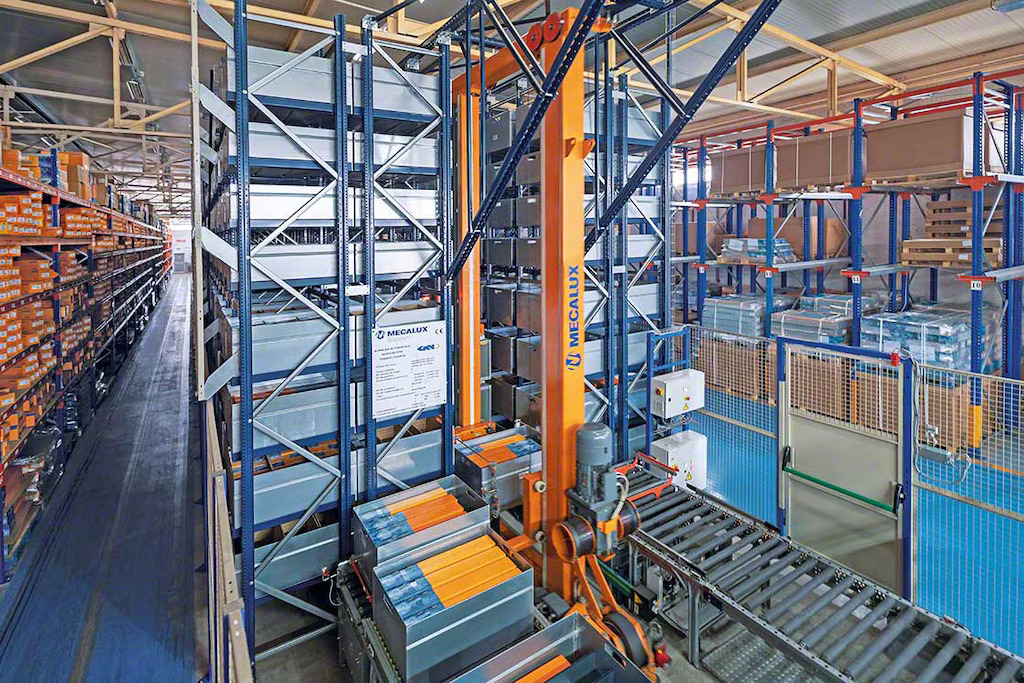
The term “smart warehouse” gets used loosely, and that’s created real confusion about what these systems include and what they’re worth investing in. Some companies hear the phrase and picture fully automated facilities with robotic arms and conveyor networks. Others assume it just means having a decent warehouse management system. The reality sits somewhere in between, and understanding where your facility actually stands matters more than chasing a label.
What Makes a Warehouse “Smart”
A smart warehousing system is any setup that uses technology to make decisions, move information, or coordinate physical processes faster and more accurately than doing those things by hand. That definition covers a wide range, from basic barcode scanning to live inventory tracking to automated sorting equipment.
The common thread is data. Smart systems collect it continuously, act on it quickly, and surface it in ways that help people make better decisions. A warehouse that knows exactly where every SKU is, how fast each one moves, and when stock needs replenishing is operating smarter than one where staff spend time counting shelves and reconciling spreadsheets after the fact.
A smart warehousing setup is not a single product you buy and install. It’s a stack of systems that need to talk to each other to be useful.
The Core Components
Warehouse management systems are the operational foundation. A WMS tracks inventory from the moment goods arrive through putaway, picking, packing, and dispatch. It directs staff to the right locations, logs every transaction, and gives managers a live view of what’s in the facility and where. Without a functional WMS, every other layer of smart warehousing sits on a shaky base.
Barcode scanning and RFID technology feed the WMS with accurate, continuous data. Scanners at receiving docks, pick stations, and shipping doors create a running record of product movement. RFID takes this further by tracking multiple items at once without line-of-sight scanning, which speeds up receiving and cycle counts considerably. For high-volume facilities or those managing large SKU counts, the accuracy gains alone justify the investment.
Inventory slotting software uses movement data to determine where products should sit physically. Fast-moving SKUs belong close to packing stations, while bulk reserve stock and slow movers can go further back. Slotting isn’t a one-time exercise. Demand patterns shift, product lines change, and seasonal peaks move inventory priorities around. Smart slotting systems flag when reassignment would improve pick efficiency, rather than waiting for a manager to notice the problem.
Environmental monitoring belongs in this conversation too. Temperature and humidity control systems are standard in any facility handling food, pharmaceuticals, or other condition-sensitive goods. FDA compliance for food-grade storage requires documented environmental controls, not just good intentions. Smart monitoring equipment logs conditions continuously, triggers alerts when readings drift outside acceptable ranges, and creates audit trails that satisfy regulatory requirements. For businesses whose products are temperature-sensitive, this layer isn’t optional technology. It’s a baseline operating requirement.
Automation and Where It Fits
People tend to frame automation as the defining feature of smart warehousing. It’s more accurately one layer among several. Goods-to-person systems, automated conveyors, and robotic picking equipment can increase throughput measurably, but they require substantial capital investment and work best in facilities with consistent, predictable order profiles.
Most mid-sized businesses don’t need a fully automated facility to see real gains from smart warehousing. A well-configured WMS paired with reliable scanning and smart slotting will outperform a poorly managed automated system. The technology should match the scale and nature of the facility, not the other way around.
Where automation delivers clear value is in repetitive, high-volume tasks: sorting parcels, moving pallets between zones, or consolidating orders for shipping. These tasks are time-intensive, error-prone at scale, and well-suited to mechanical systems that don’t fatigue or make scanning errors at hour seven of a shift.
Integration Is Where Most Facilities Fall Short
The gap between a smart warehousing system and a collection of disconnected tools comes down to integration. A WMS that doesn’t connect to your order management platform generates unnecessary data entry work. When scanning equipment logs into a separate inventory system, staff end up reconciling records that should never have diverged. Slotting software without access to live sales data makes recommendations based on old demand patterns.
Getting integration right means auditing what systems you already run, understanding which ones hold the data that matters, and building connections that eliminate redundant handoffs. This isn’t always a clean project, particularly for facilities that have added systems over time without a clear technology roadmap. Fewer errors, faster processing, and better visibility are the gains that compound once those connections are in place.
What Smart Warehousing Actually Solves
The practical benefits show up in a handful of measurable places. Directed pick instructions reduce order errors by removing guesswork from the equation. On the receiving end, RFID cuts dock processing time by eliminating counts that staff would otherwise do by hand. Stock discrepancies become far less common when every movement gets logged automatically.
One reliable way to speed up your warehouse fulfillment process is reducing the time staff spend searching for products, correcting errors, or waiting for information they should already have. Directed workflows keep people moving through tasks efficiently rather than problem-solving on the fly.
For facilities running both warehousing and fulfillment, smart systems help manage the friction between the two. Storage and order processing have different priorities and rhythms. Technology that gives managers visibility across both makes it considerably easier to catch problems before they affect customers.
A Practical Starting Point
If your current setup involves hand-counted inventory, paper-based pick lists, or disconnected systems that require someone to reconcile records at the end of each shift, those are the areas worth addressing first. The gains from fixing those problems are immediate and don’t require major capital investment.
From there, the path forward depends on your volume, your product mix, and where your current bottlenecks actually live. Worldwide Logistics Group works with businesses across industries on exactly these questions, helping clients figure out which technology investments make sense for their scale and structure, rather than recommending systems that solve problems they don’t have.
Smart warehousing isn’t about having the most advanced facility on the market. It’s about running an operation where the right information reaches the right people at the right time, and where the physical movement of goods follows from that, reliably and without unnecessary friction.