
Worldwide Logistics Group is closely monitoring the rapidly evolving situation across the Middle East and its impact on global transportation networks. The current crisis is creating disruptions across both air and ocean freight, resulting in service suspensions, extended transit times, and rising costs.
Below is a summary of what customers should expect and how to plan accordingly.
Ocean Freight Disruptions
Ocean freight lanes are facing elevated risk and operational challenges:
- Security concerns are impacting vessel movements through the Strait of Hormuz and Bab el-Mandeb.
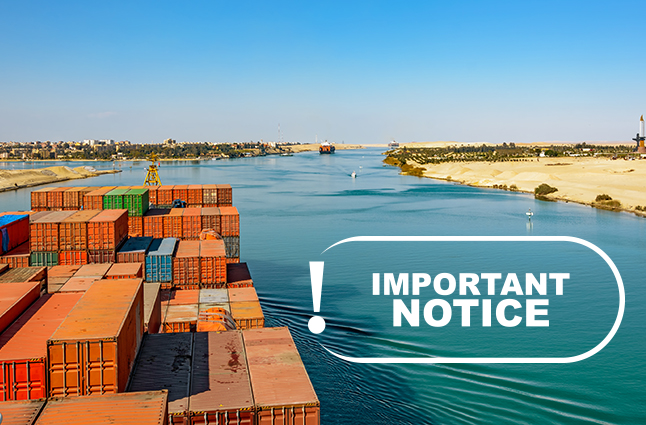
- Major ocean carriers have suspended transits via the Suez Canal.
- Many vessels are being rerouted around the Cape of Good Hope.
- Transit times to Europe, the United States, and Canada are increasing by approximately 10–18 days.
- Freight rates are rising with War Risk and Emergency Surcharges being introduced.
- Equipment shortages and blank sailings are expected in the coming weeks.
The cumulative effect is tighter global capacity and increased unpredictability in sailing schedules.
Air Freight Disruptions
Air cargo networks across the region are experiencing widespread operational interruptions:
- Major international carriers have suspended flights to key regional gateways including: Tel Aviv, Beirut, Amman, Erbil, Dammam, Tehran, Dubai and Abu Dhabi.
- Embargoes are in effect for exports, imports, and transit cargo moving to or through several affected destinations.
- Widespread regional airspace closures are limiting available cargo capacity.
- Significant backlogs are building on westbound cargo.
- Rates are increasing sharply due to reduced capacity.
- There is a high probability of last-minute cancellations, re-bookings, and operational adjustments.
Customers should anticipate volatility in pricing and routing as airlines adjust schedules in real time.
Worldwide Logistics Group Recommendations
To mitigate risk and maintain supply chain continuity, we recommend:
- Prioritizing time-sensitive cargo and evaluating modal alternatives where feasible.
- Planning for extended transit times and higher freight budgets.
- Reconfirming rates and space availability at time of booking.
- Preparing for short-notice operational changes, including re-routes and schedule shifts .
Ongoing Monitoring
This situation remains highly dynamic. Worldwide Logistics Group is working closely with airline and ocean carrier partners to secure capacity and provide the most current routing options available.
We will continue to provide timely updates as conditions evolve. If you have specific shipments or exposure in the region, please reach out to your Worldwide Logistics Group representative for guidance.
Our team remains committed to protecting your supply chain and delivering solutions—no matter the complexity of the challenge.